Last week, when a crowd began to gather inside the heritage-listed Capri Theatre in Adelaide’s inner south, it wasn’t for a film or an arts event, or a corporate get-together.
Key points:
- Reflecting the nation’s diversity is a challenge the arts sector is grappling with
- One group has warned that, if change doesn’t happen, talent will move overseas
- A grassroots project is addressing the issue by taking it to the stage
The gathering instead comprised a group of friends trying to answer one question: what does it mean to be Asian-Australian?
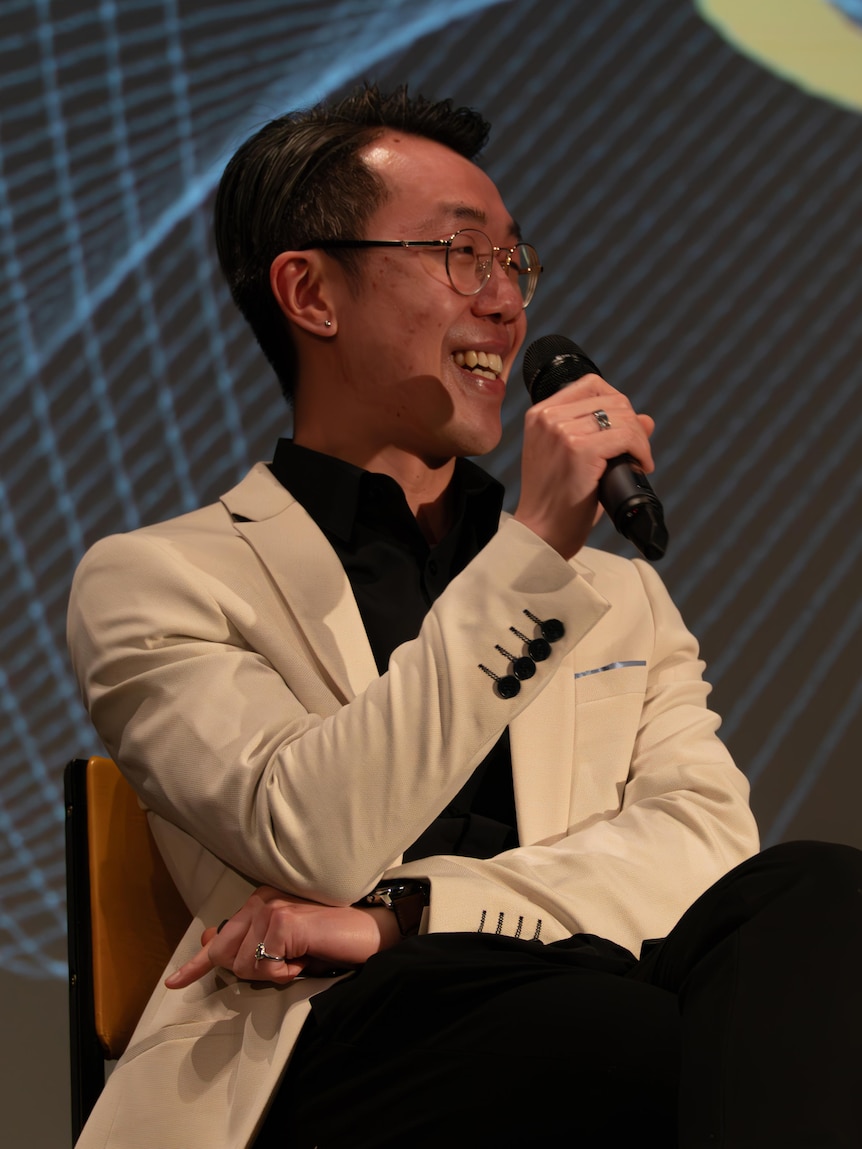
It is a quest that organiser Sam Lau and his friends have been on since the early days of the pandemic.
“I’ve been so blessed with a group of people who have come together and interrogated that question and have slowly built a little bit of a language to talk about it,” Mr Lau said.
“I think that’s really important and really special to have.”
Almost 300 people attended to show their support and interest in the stories and art made by some of Adelaide’s Asian-Australian creatives.
The inaugural event, entitled “Between Our Stories”, provided a platform for sharing personal experiences and celebrating the points of similarity and difference between two cultures.
The actor and filmmaker said exploring identity is a big part of the work he does.
“I see the effects of talking about it and exploring the stories and, through the event, actually seeing the impact of people coming,” Mr Lau said.
Four short films, music and poetry created by local artists were showcased at last week’s launch and Mr Lau said it helped create a space for SA’s multicultural creatives to unite.
“The importance of [the event] was really to get people together because I feel like I know so many individual people who are so skilled in this,” Mr Lau said.
“But they’ve never had the connection to other organisations, or they don’t have those connections to other people.
“We’re sitting on a gold mine — all we need is just to get together and talk about it.”
‘We lose that talent’
Those sentiments are shared by Erin Wen Ai Chew, the co-founder of the Asian-Australian Alliance, a national advocacy body.
“Those stories are quite authentic because they reflect the actual experiences of being Asian-Australian and our stories,” she said.
But Ms Chew said productions of diverse stories are few and far between in Australia.
“The industry in Australia still feels that it’s a bit of a risk to take, because they feel that it doesn’t appeal to the broader Australian audience,” she said.
“It’s about how we change that type of thinking, really.”
Ms Chew is calling for more diverse decision-makers for productions and film festivals, arguing that, if change doesn’t happen, Australia’s diverse talent pool is in danger of being watered down.
“We end up losing that talent, a lot of these Asian-Australians who are actors, filmmakers and creatives end up moving overseas,” she said.
“Whether they go over to the UK, to Europe to Asia or try themselves in Hollywood in the US — what happens is that we just drain and lose that talent.”
Ms Chew said overseas markets are more attractive to creatives from multicultural backgrounds because, abroad, there is more of an acceptance of diverse representation.
It is something Mr Lau has also noticed since graduating from acting school.
“Compared to America, I think, where there’s this big kind of backing of Asian-American work, Australian is a bit behind,” Mr Lau said.
But Ms Chew said that there was no need to look far to find out what successful representation looks like.
She said positive change is already evident in certain parts of Australia’s arts sector.
“We have seen those changes in the stage plays and productions, but we haven’t seen those changes in the film and TV industry,” she said.
‘Bedrock of public policy’
The Australia Council for the Arts is the federal government’s principal funding and advisory agency for the sector.
Its chief executive, Adrian Collette, said the council is acutely conscious of the challenges when it comes to reflecting diversity, but is also strongly committed to meeting them.
“In the 21-22 annual report, which was our last published annual report, we invested nearly $25 million in organisations and artists who declare that they are culturally and linguistically diverse,” Mr Collette said.
He said his organisation invests in the cultural life of the nation and that 34 per cent of its board advisors are from culturally and linguistically diverse backgrounds.
“When you live in one of the most diverse countries on Earth, the telling of stories, the sharing of culture is a very good thing for society and should be a bedrock of public policy,” he said.
Mr Collette said he is aware of the overseas market that Australia is competing against.
“We are not one of those countries that is defined exclusively by our language, so we are always competing with North America, the UK and other English-speaking parts of the world,” he said.
“We have a number of programs in place. I won’t pretend that it’s adequate yet, but we are well on the way.”