
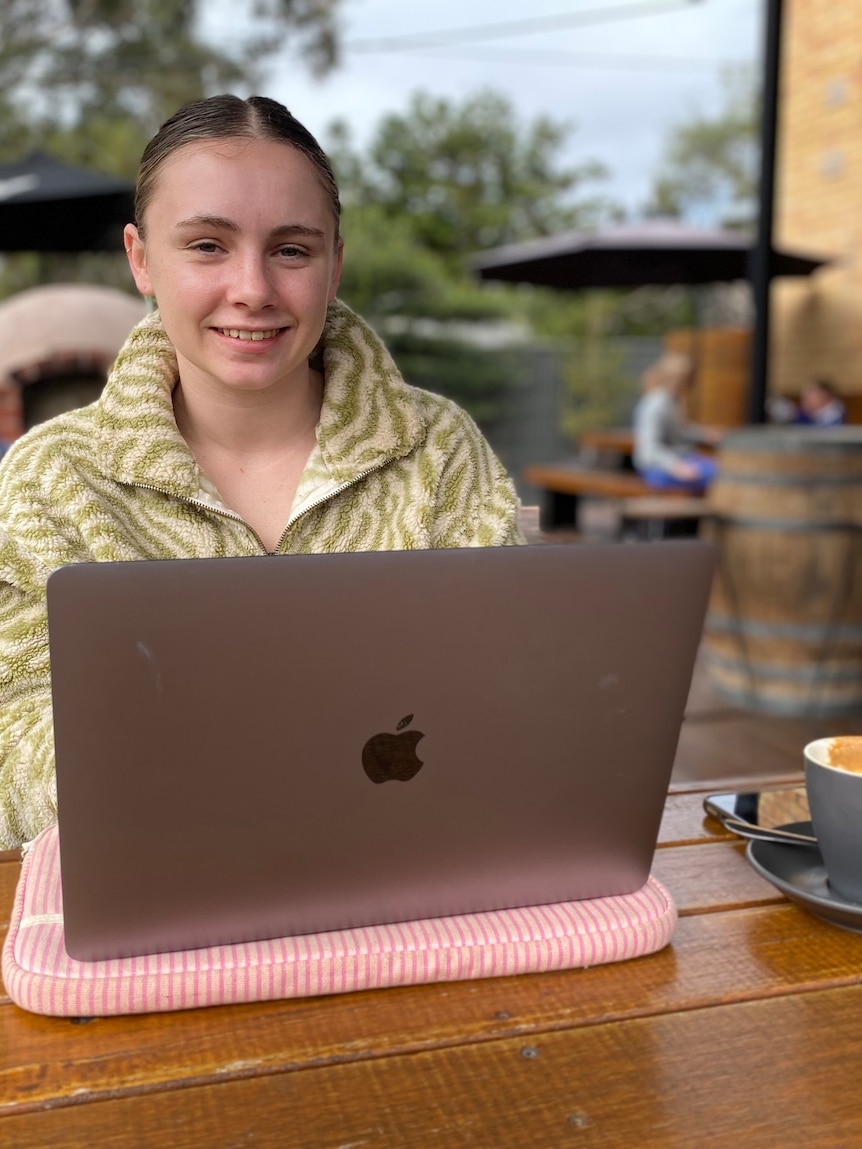
Like many young people, Madelyn Long was daunted by the prospect of choosing a career when she finished high school last year.
Key points:
- Professor Alastair Blanshard says people tend to change careers between five and seven times during their working lives
- He says it is wise to accumulate a range of skills and knowledge through broader education courses
- Madelyn Long, 19, says she is open to the idea of working in roles that may not exist yet
The 19-year-old from Renmark had the added stress of needing to relocate from regional South Australia to the city to study.
“If I want to go to uni and move to Adelaide, I have to work out accommodation, who I’m going to stay with and adjusting to a whole new lifestyle,” Ms Long said.
She opted to take a gap year and figure out her options while working at a cafe and a Thai restaurant.
According to research from the University of Queensland (UQ), young people on the cusp of starting careers are far less likely than their parents to be locked into the same job for life.
Zoomers such as Ms Long could expect to have as many as 17 jobs and up to seven careers over the course of their working lives.
The research suggests that possessing a range of knowledge and abilities will place graduates in a far better position than committing to one field.
That is good news for Ms Long.
“I might want to have a job that I don’t even know exists yet,” she said.
“So it’s good to just learn those skills first and then work it out after that.”
Career changes ahead
The study said that unlike their parents and grandparents, Generation Z and Millennial employees needed to have “a diverse and somewhat universal skill set”.
UQ professor Alastair Blanshard said learning skills should be seen as more important than final job outcomes.
“[Don’t] think about … doing a degree to get a specific job,” he said.
“[Think] about what kinds of skills the degree is going to offer that [you] can take forward that will be useful … no matter what the job market throws up.”
Dr Blanshard said the research showed people were likely to change jobs every three years.
“Always keep an eye on, ‘What are the skills I’m acquiring and how can they set me up for the future?'” he said.
“For example, effective communication is one that will be in dozens of different areas, both now and going forwards.
“Degrees that offer effective communication are going to be really important.”
One degree that was identified in the study as a great fit for a workforce undergoing constant change was a Bachelor of Arts, because graduates could mix and match study areas and were more likely to learn how to think critically.
Ms Long said it was comforting to know that she need not be locked into one career or job for the rest of her life, which was a concern for many young adults trying to decide what to study.
She has settled on a three-month online design course before she decides whether to commit to a three-year Creative Industries degree in Adelaide.
“Especially with digital design — there’s so many broad jobs … picking a broader degree and being able to see what is there, I think, is really important,” she said.
“It’s a good experience, but it’s a lot to take on all at once — especially when you’re trying to adjust to uni life compared to high school life.”
Loading