A bridge built 25 years ago to connect two Riverland towns on either side of the Murray River was launched in 1997 with one of the region’s biggest celebrations ever.
Local police estimated more than 15,000 people attended the Berri Bridge opening to celebrate the launch of the structure, but it wasn’t an easy project to get across the line.
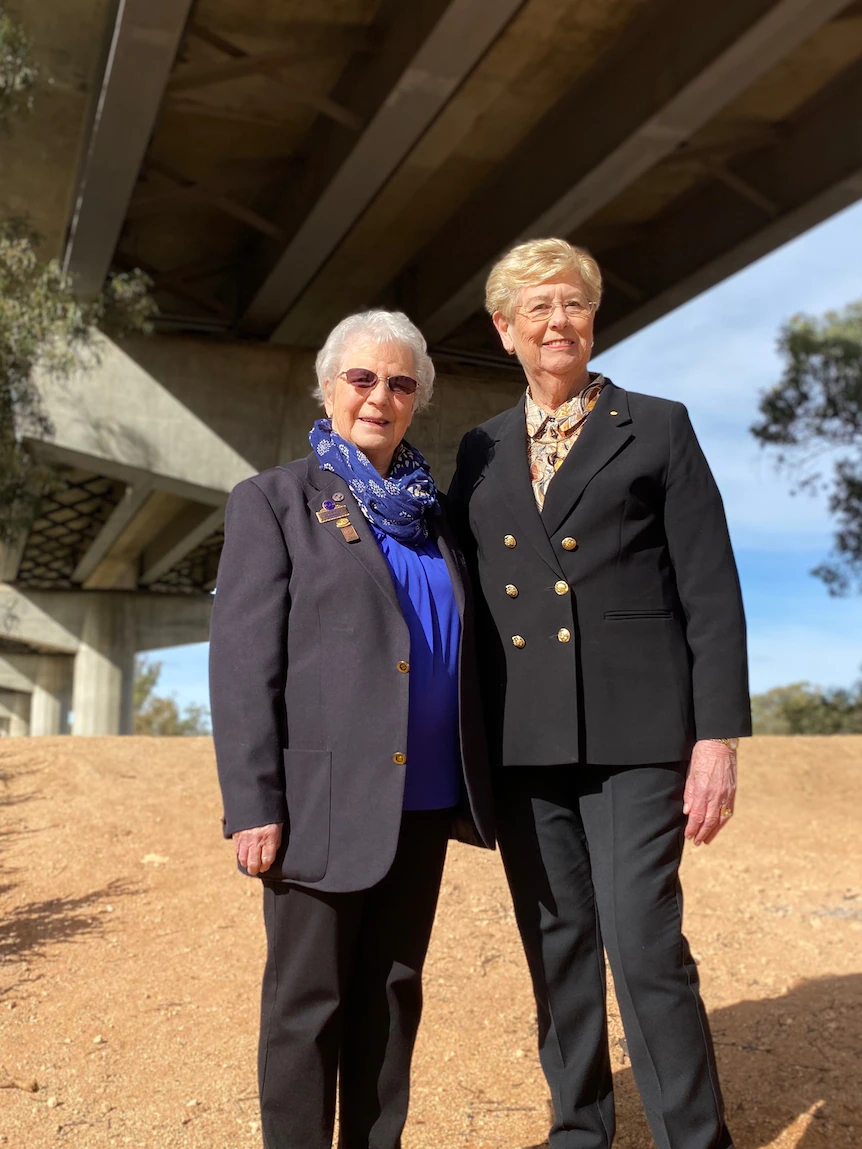
Margaret Evans was mayor of Berri Barmera Council at the time and was instrumental in the push to get the bridge built, alongside former Loxton Waikerie mayor Jan Cass.
“It was fought for very hard by a lot of people and this arguing for a bridge went on for a very long time,” Ms Evans said.
“We just couldn’t get agreement between the river councils, not even those that were up this end of the river.”
Among the numerous failed attempts to get a bridge off the ground was pushback from the Renmark and Barmera Councils who were concerned a bridge linking Berri and Loxton would draw people away from their respective towns and dry up economic opportunities.
Berri Barmera Council local history officer Jacque Zagotsis said the pushback also came from members of the community.
“It’s a little bit funny now because that bridge has benefited many people, it’s a pretty good representation of how the Riverland can benefit.”
Bridge over expensive waters
Prior to the bridge, local commuters and visitors to the region would use a ferry to cross the Murray River.
“There was so much time wasted by people just sitting and waiting at the ferry,” Ms Cass said.
“People had to sit in their cars on really hot 40-degree days with no air conditioning or toilet facilities and wait over an hour some days.
Football grand final days saw waiting times peak at several hours, with lines stretching all the way back to Bookpurnong Hill.
The former Loxton Waikerie mayor said it was not until she and Ms Evans obtained a report that “fell off the back of a truck” that they were able to do the maths on the running costs of the ferries and strengthen their case for a bridge.
“We didn’t take too long to work out it wouldn’t take very many years of the bridge being here before it would start costing the government nothing.”
At a cost of around $18 million in the 1990s, it was estimated by original bridge builders, Built Environs, that a similar project would cost around $90 million today.
Bridging the gap
Ngarrindjeri man Shane Karpany was one of the artists involved in creating the original mural under the bridge, alongside artistic director Garry Duncan, to reflect the region’s Aboriginal culture.
It shared the story of Ngurunderi dreaming, a Ngarrindjeri ancestral hero who chased a Murray cod, Ponde, down the Murray River.
“As the cod was coming down, his sweeping tail created and widened the river, which was a little creek back then,” Mr Karpany said.
“For an Aboriginal person [the mural] teaches us about our local environment, animals, how to care for country, community, and connection to local Aboriginality too.