A flood of renewable energy has helped drive down household power prices to their lowest levels in almost a decade, according to a report which suggests Australia has some of the cheapest electricity in the world.
Key points:
- Australia ranked 10th lowest among advanced economies for the average price of electricity
- Industry analysis finds power prices are their lowest in eight years and bills have fallen 8 per cent since 2018-19
- Germany has the world’s most expensive electricity, while Iceland has the cheapest
New analysis by the Australian Energy Council (AEC), which represents big power providers, shows typical residential power bills fell over the past three years as a raft of changes put downward pressure on prices.
Using data from the competition watchdog, the AEC said a typical residential bill was $1434 a year in 2020-21, a figure that was 8 per cent — or $128 — lower than 2018-19.
According to the council, Australian households were paying the 10th lowest rate among the world’s advanced economies for every unit of electricity they used.
It said Australian prices were US17.6¢ per kilowatt hour (kWh) when adjusted for purchasing power parity, a measure which tries to equalise the cost of identical goods.
Green power ‘deflating prices’
By comparison, the AEC noted the average price among members of the Organisation for Economic Cooperation and Development (OECD) was US24.2¢/kWh, while it was as high as US40.9¢/kWh in Germany.
While the deflation across the electricity industry was crimping the margins of power providers, the AEC noted it was delivering significant benefits to consumers.
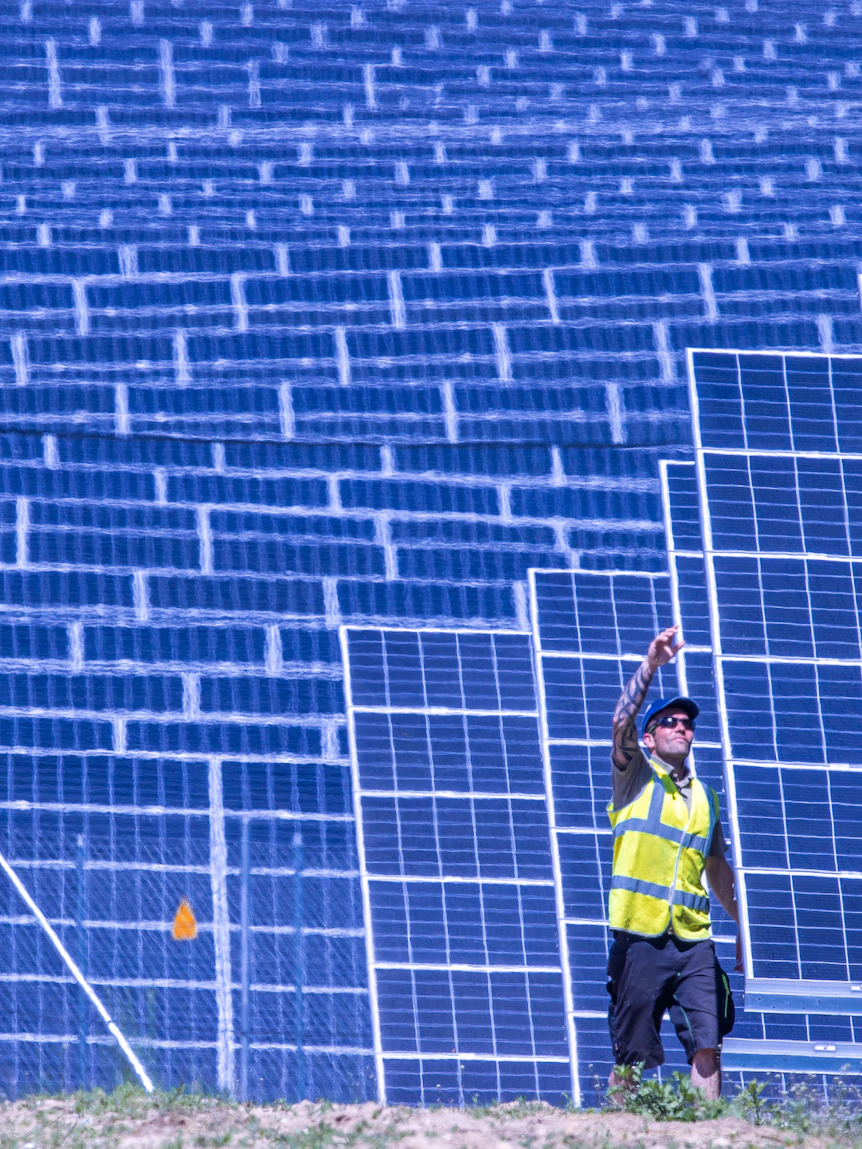
At the heart of the trend was the surge of low-cost renewable energy coming into the system, which the council said was pushing down wholesale electricity costs.
On top of this, it said fuel costs for coal and gas were generally lower as well, while poles-and-wires costs, which typically account for up to half of a bill, had also been coming down.
Despite overall declines, the AEC said there were price pressures emerging, particularly in the cost of meeting and administering government reforms and environmental policies.
It pointed to the ACT’s renewable energy target as an example, noting its costs had blow out by 133 per cent to $153 million and, along with associated policies, would add hundreds of dollars to the average household bill.
Globally, the council said Germany, the Czech Republic, and Poland had the highest power prices.
However, it said that while Germany’s high costs were related to an “ambitious decarbonisation target” backed by hefty taxes, the Czech Republic’s and Poland’s heavy reliance on coal-fired power was behind their rankings.
‘Pressures emerging’ on costs
The AEC said that as well as being old and inefficient, the two countries’ coal-fired generation fleets were exposed to Europe’s emissions reduction scheme.
At the other end of the spectrum, the AEC said Iceland, Norway and Canada were among the lowest-cost providers of electricity of the world’s rich economies.
This was thanks to their abundance of clean and cheap hydro-electricity, it said.
Sarah McNamara, the chief executive of the industry lobby group, said Australian electricity users were faring relatively well compared with their international peers.
“This assessment of how much Australian homes and businesses pay shows our electricity supply is internationally competitive and that retailers are passing savings on to customers,” Ms McNamara said.
“The competitive retail market is also helping keep electricity costs down with market offers offering better value than the regulated default offers set by government.”
Price drop due to several factors
Matt Rennie, who along with his wife Simone runs Brisbane energy consultancy Rennie Partners, said falling wholesale costs reflected increased competition among generators as more and more renewable energy players entered the market.
Mr Rennie said this competition was forcing all generators including coal-fired plants to lower their prices, which was flowing through to lower bills.
He also said the improved efficiency of Australia’s transmission and distribution networks following years of heavy investment earlier this century was another critical reason why costs were easing.
However, Mr Rennie said the trend of declining wholesale power prices was unlikely to last as coal-fired plants retired or were forced out of the market because of their worsening economics.
What’s more, he said renewable generators such as wind and solar farms would increasingly need to provide back-up or “firming” services to ensure they could meet demand even when the sun wasn’t shining or the wind wasn’t blowing.
And he said it was a similar story for the network, which would require huge investment over the coming decades to accommodate ever increasing amounts of renewable energy.
“Essentially, it just become a scale game.
“The technologies are now pretty constant and everybody is going to need to spend in other ways to figure out how to firm, and they’re all going to use the same things.”
Longer term, Mr Rennie said he doubted renewable energy would deliver lower power prices than were historically the case.
But he said they still offered the cheapest option for the future and “we will have a planet at the end of it”.
“We’re moving from a situation of very low-cost, coal-fired power to a situation of low-cost renewables with medium-priced firming and system security.
“Firmed renewables are not necessarily cheaper than coal and to be honest, it’s not really the point.”
Posted , updated